How Much Does It Cost to Build a SaaS Product in 2026?
Building a SaaS product is one of the highest-leverage investments a company can make — recurring revenue, scalable delivery, low marginal cost. But the investment required to build one properly is frequently misunderstood. Here's what SaaS development actually costs in 2026, broken down by phase, feature, and infrastructure.
The Realistic Range
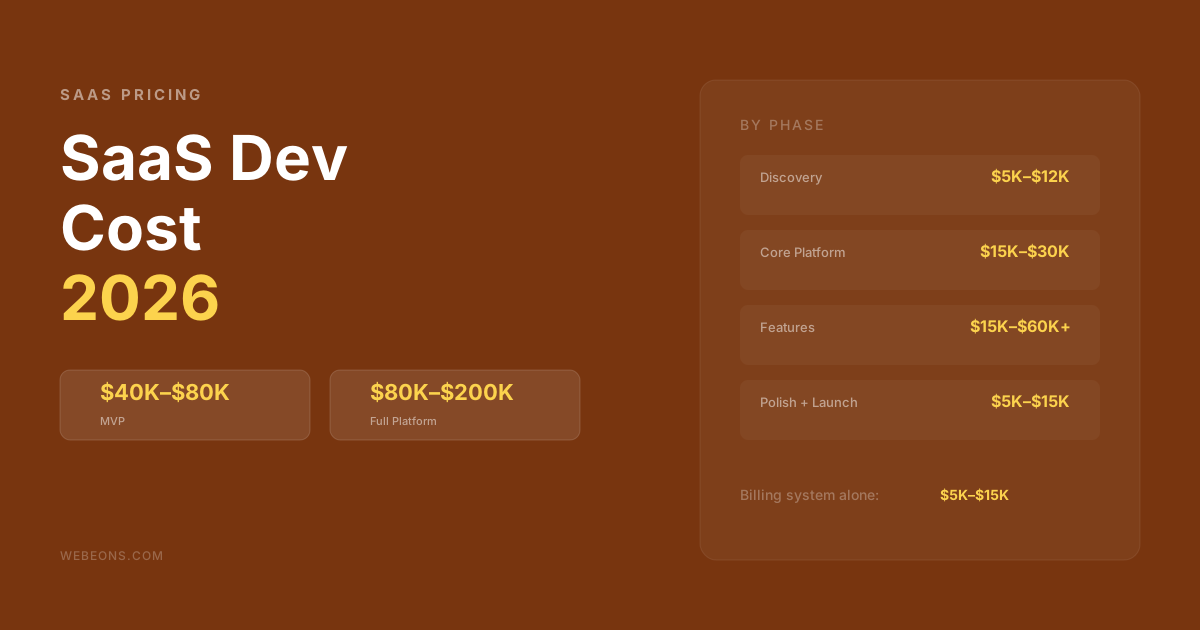
A production-ready SaaS MVP costs between $40,000 and $80,000. A full-featured SaaS platform costs $80,000 to $200,000+. The variance comes from three factors: feature complexity, integration requirements, and compliance needs. A simple project management tool and a healthcare data platform are both "SaaS products," but they're worlds apart in engineering effort.
Cost by Development Phase
Discovery and Architecture ($5,000–$12,000)
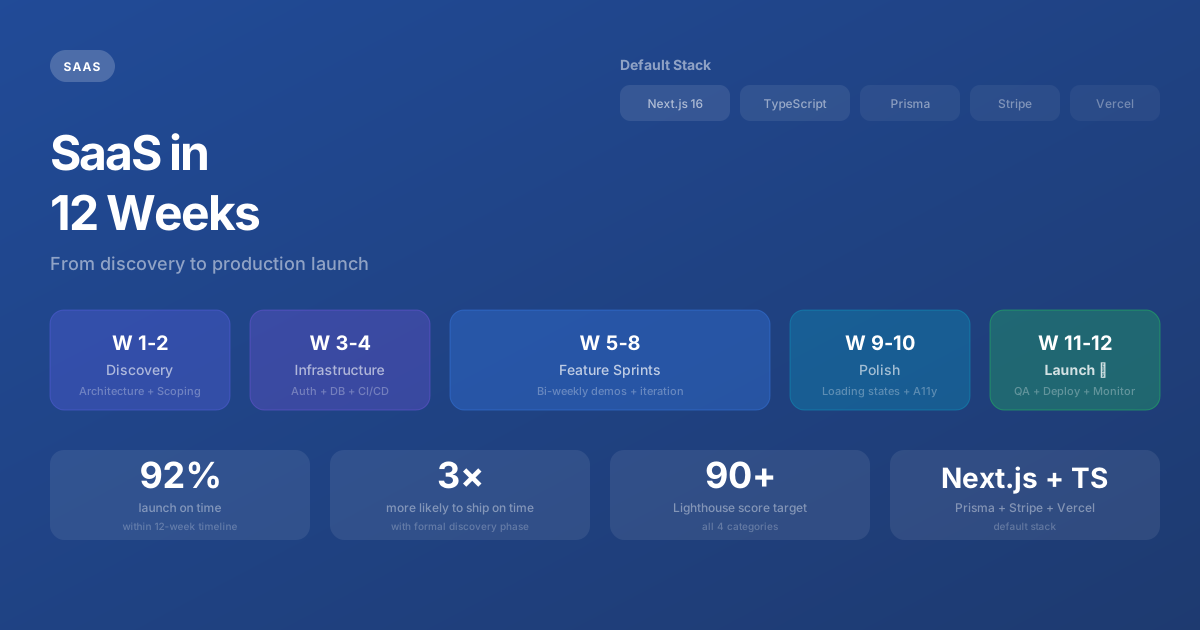
This phase defines everything that follows: database schema design, API architecture, multi-tenancy strategy, authentication approach, billing model, and feature prioritization using MoSCoW (Must/Should/Could/Won't). Skipping discovery is the single most expensive mistake in SaaS development — decisions made here affect every line of code written afterward. We cover this phase extensively in our guide onhow we build SaaS products in 12 weeks.
Core Platform ($15,000–$30,000)
The foundation every SaaS product needs: user authentication with role-based access control (RBAC), database with multi-tenant isolation, subscription billing via Stripe (checkout, customer portal, webhooks, dunning), transactional email for onboarding and notifications, CI/CD pipeline for automated deployments, and adesign system for consistent UI across the product. This infrastructure is non-negotiable — without it, you're building on sand.
Feature Development ($15,000–$60,000+)
Your product's unique value lives here. The cost depends entirely on what your product does. A simple CRUD application with 8-10 screens costs $15,000–$25,000. A product with real-time collaboration, complex workflows, data visualization, or AI-powered features costs $30,000–$60,000+. The key is ruthless feature prioritization — build the 20% of features that deliver 80% of the value for your first release.
Polish and Launch ($5,000–$15,000)
Loading states, error handling, empty states, onboarding flows, responsive design audit, performance optimization, accessibility review, and security hardening. This phase is often rushed or skipped entirely — and it's the difference between a product that feels professional and one that feels like a prototype.
The Billing System Alone Costs $5,000–$15,000
Stripe makes payment processing accessible, but implementing subscription billing properly is surprisingly complex. You need to handle: initial checkout (hosted or embedded), free trials with automatic conversion, plan upgrades and downgrades with proration, failed payment retry logic (dunning), customer self-service portal, usage-based billing metering (if applicable), tax calculation, invoice generation, and webhook handling for all state changes. Each of these is a day or more of development. Teams that underestimate billing complexity consistently blow their budgets.
Monthly Running Costs
After launch, a SaaS product costs $200–$1,500/month to run depending on user volume: hosting ($20–$200 on Vercel or AWS), database ($25–$200 for managed PostgreSQL), transactional email ($20–$100), monitoring and error tracking ($30–$100), and Stripe's 2.9% + $0.30 per transaction. For a product with 500 users, expect $300–$500/month. At 10,000 users, $800–$1,500/month. These costs scale linearly and predictably.
Build vs Buy: When to Use Existing Platforms
Not every SaaS idea requires custom development. If your product is primarily content delivery, consider membership platforms like Memberstack. If it's scheduling, look at Cal.com. If it's form-based workflows, evaluate Tally or Typeform with Zapier. Custom development makes sense when your core value proposition requires unique functionality that no existing tool provides, when you need full control over the user experience, or when your business model requires specific billing, multi-tenancy, or data isolation requirements.
The No-Code Trap
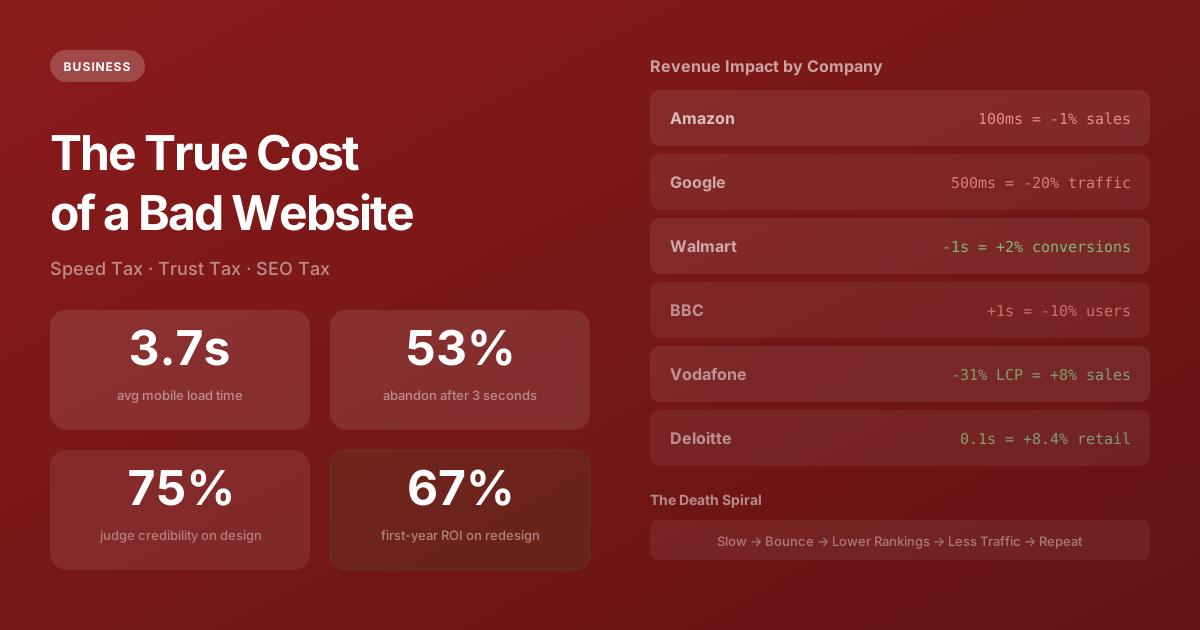
No-code tools like Bubble and Glide are excellent for validation — building a prototype to test whether users want your product before investing $50,000+ in custom development. But they're not suitable for production SaaS products. No-code platforms impose performance limitations (3-5 second load times), restrict customization, create vendor lock-in, and struggle with complex business logic. We see a consistent pattern: founders validate with no-code, get their first 50-100 paying users, then rebuild properly when the platform can't keep up with growth.
How to Reduce Costs Without Cutting Corners
Use existing infrastructure instead of building from scratch: Clerk for authentication ($0–$25/month), Stripe for billing, Resend for transactional email, Vercel for hosting, and Neon or Supabase for managed PostgreSQL. These services handle the undifferentiated heavy lifting so your development budget focuses entirely on what makes your product unique. A good development partner will recommend these tools — not build custom versions to inflate the project scope.
What to Look for in a Development Partner
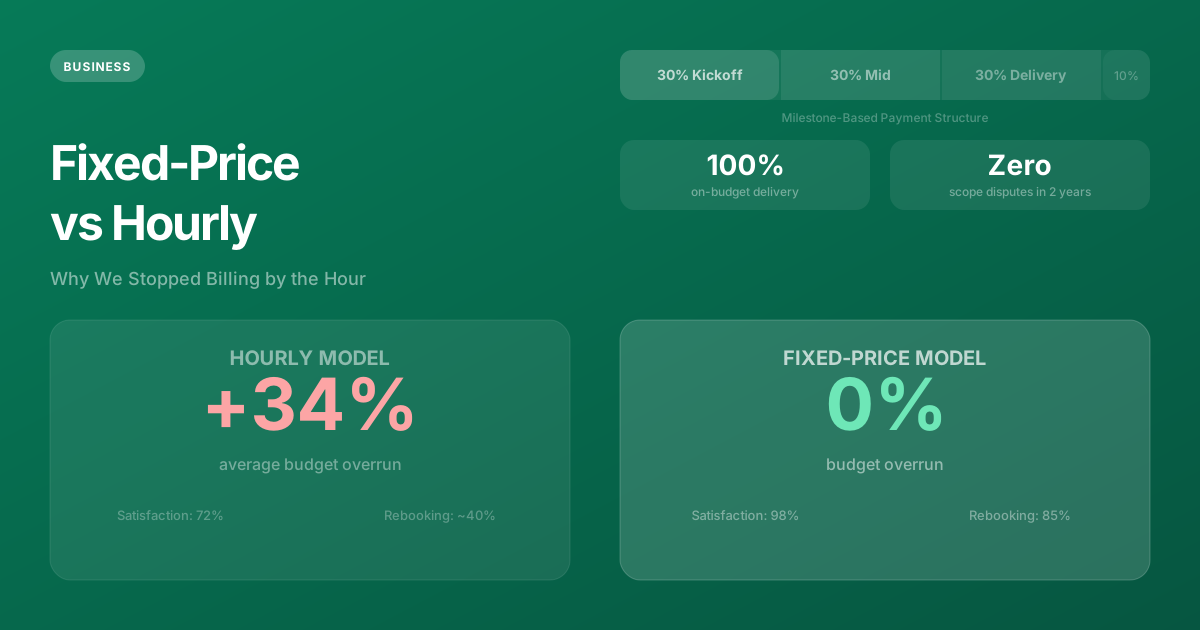
Choose a team that has built SaaS products before — not just websites. Ask for examples of multi-tenant architecture, Stripe billing integration, and production monitoring setups. Demand fixed-price quotes with clear deliverables. Ensure you own 100% of the code from day one. And verify that the tech stack is standard enough that any competent developer can maintain it after the engagement ends. At Webeons, everySaaS project ships with full code ownership, comprehensive documentation, and a standard stack that's easy to hire for.
Bottom Line
SaaS development costs $40,000–$200,000 depending on complexity. The most successful products start lean ($40,000–$60,000 for an MVP), validate with real users, then invest in growth features based on actual usage data. Don't build the full vision on day one — build the minimum product that proves the thesis, then iterate. The cost of building wrong is always higher than the cost of building right.
Need help with this?
We build exactly what this article describes — production-grade digital products for ambitious companies.
Start a Project →