How Much Does a Website Cost in 2026? Complete Pricing Guide
"How much does a website cost?" is the single most common question we hear from potential clients. And the answer — like most honest answers in software — is "it depends." But that's not helpful, so let's break down exactly what drives website costs in 2026, with real numbers from real projects.
The Short Answer
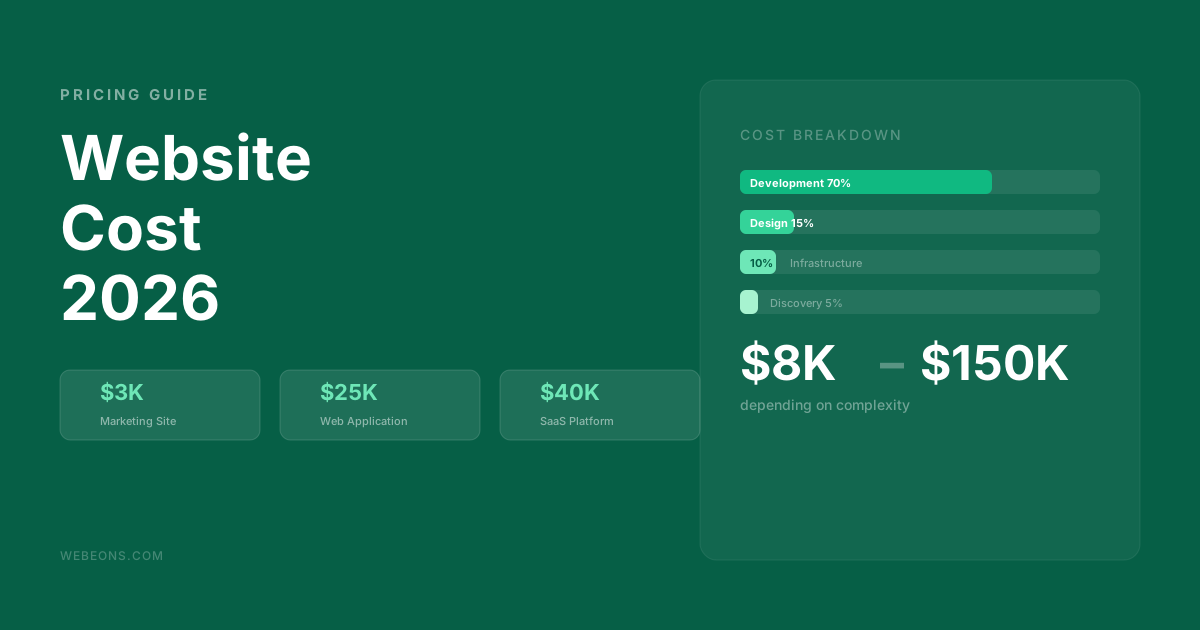
In 2026, website costs fall into predictable ranges based on what you're building. A simple marketing website runs $3,000–$15,000. A custom web application costs $25,000–$100,000. A full SaaS platform ranges from $40,000 to $150,000+. These ranges assume you're working with a professional agency or studio — not a freelancer on Fiverr and not a Big Four consultancy billing $300/hour.
What Determines the Price
Five factors drive 90% of the cost variance: the number of unique page templates, whether you need a content management system, the complexity of interactive features, third-party integrations (payment processing, CRMs, email tools), and whether the project requires custom design or uses an existing design system.
A 5-page marketing site with a contact form is fundamentally different from a 5-page site with user authentication, a dashboard, and Stripe billing. The page count is the same, but the engineering complexity is 10× higher.
Cost Breakdown by Website Type
Marketing Website ($3,000–$25,000)
This is your company's digital storefront — homepage, about, services, blog, and contact page. At the lower end, you're getting a template-based build with minimal customization. At the higher end, you're getting custom design, animations, a headless CMS for easy content updates, and SEO optimization including structured data and Core Web Vitals performance. The sweet spot for most businesses is $8,000–$15,000 — custom enough to stand out, but not over-engineered for what a marketing site needs to do.
E-Commerce Site ($15,000–$60,000)
Online stores add significant complexity: product catalogs, inventory management, payment processing, shipping calculations, order management, and customer accounts. The platform choice matters enormously here. A Shopify storefront with a custom theme sits at the lower end. A fully custom headless commerce build with a Next.js frontend, custom checkout flow, and multiple payment providers sits at the higher end. Most mid-market e-commerce builds land around $25,000–$40,000.
Web Application ($25,000–$100,000)
Web applications involve user authentication, databases, role-based access control, real-time features, and business logic that goes far beyond displaying content. Think project management tools, customer portals, internal dashboards, or booking systems. The cost is driven primarily by feature count and integration complexity. A simple internal tool with 5-8 screens costs around $25,000–$40,000. A customer-facing application with complex workflows runs $50,000–$100,000.
SaaS Platform ($40,000–$150,000+)
SaaS products are web applications with multi-tenancy, subscription billing, onboarding flows, admin dashboards, and infrastructure designed for scale. The billing system alone (Stripe integration with trials, upgrades, downgrades, dunning, and usage-based pricing) can represent $5,000–$15,000 of development effort. A production-ready SaaS MVP typically takes 12–16 weeks and costs $40,000–$80,000. Full platforms with advanced features exceed $150,000.
Hidden Costs Most Agencies Don't Mention
The development quote is only part of the total cost. Budget for these recurring expenses: domain registration ($10–$50/year), hosting ($20–$200/month depending on traffic), SSL certificates (usually free with modern hosting), email service ($20–$100/month if using transactional email), CMS subscription ($0–$200/month), analytics tools ($0–$150/month), and ongoing maintenance ($500–$2,000/month for updates, security patches, and monitoring).
A common mistake is budgeting $20,000 for development but nothing for the first year of operation. Plan for $3,000–$10,000/year in ongoing costs depending on the complexity of your site.
What Affects Quality at Every Price Point
The difference between a $5,000 website and a $25,000 website isn't just features — it's engineering quality. Cheaper builds often cut corners on performance optimization, accessibility, SEO, responsive design, and error handling. These shortcuts don't show up on launch day — they show up six months later when your site loads slowly on mobile, ranks poorly on Google, or breaks when a user does something unexpected.
The most expensive line item in any web project is the one labeled "rebuild it properly." Invest in quality engineering upfront, and the total cost of ownership over 3-5 years is dramatically lower than building cheap and fixing later.
Hourly vs Fixed-Price: Which Model is Better?
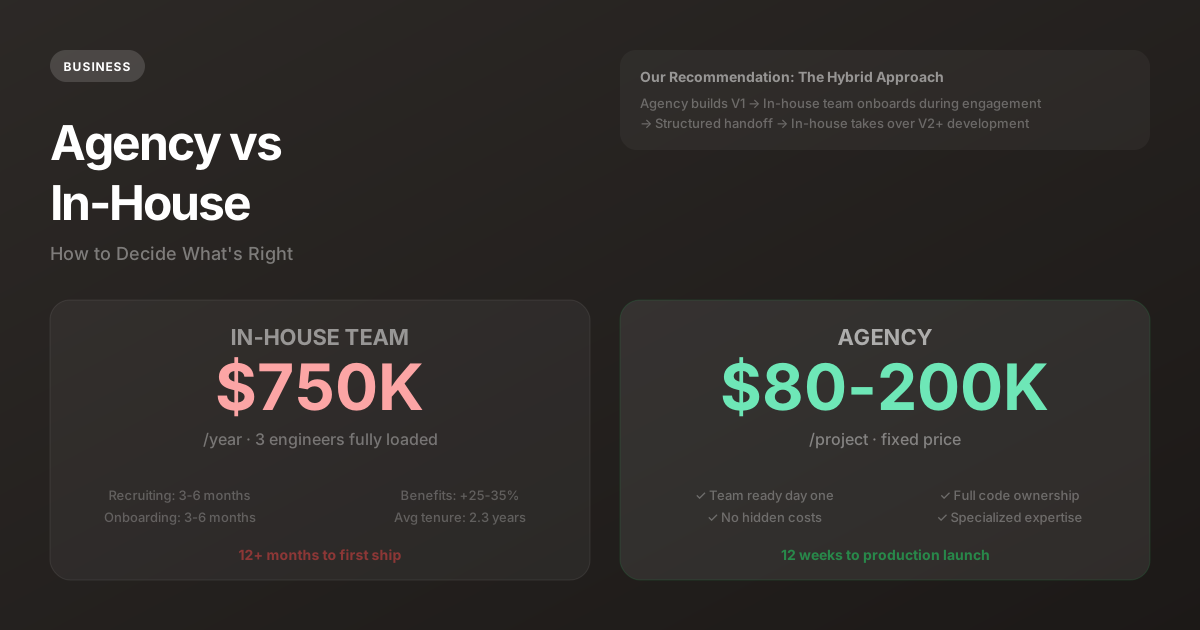
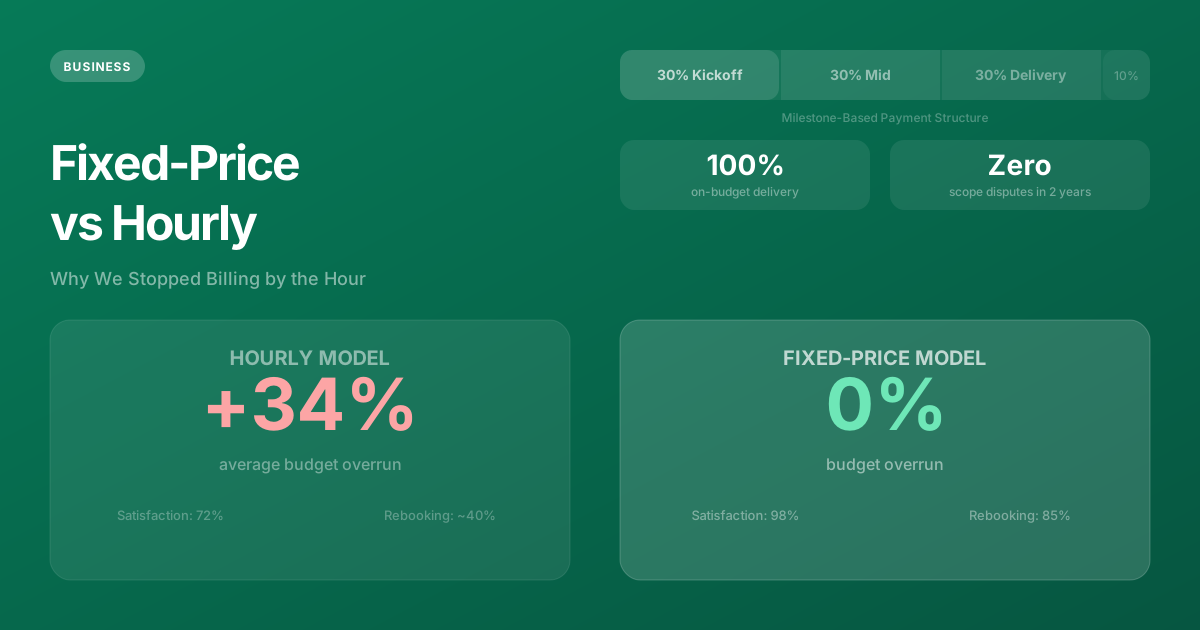
Hourly billing creates a perverse incentive: the longer a project takes, the more the agency earns. Fixed-price contracts align incentives — the agency is motivated to scope accurately and deliver efficiently. We've written extensively about why fixed-price billing produces better outcomes for both clients and agencies. The key is a thorough discovery phase that defines the scope before committing to a price.
How to Get an Accurate Quote
The best way to get a realistic estimate is to prepare a clear brief before approaching agencies. Document what your site needs to do (not how it should look — that comes later), who will use it, what integrations are required, and what success looks like. The more specific your brief, the more accurate the quote. Vague briefs produce vague estimates, which produce budget overruns.
At Webeons, we provide fixed-price quotes after a discovery phase — typically a 1-2 week paid engagement where we define the scope, architecture, and timeline together. This approach eliminates surprises and gives both sides confidence in the investment. Start a conversation — we respond within 24 hours.
The Real Cost of a Bad Website
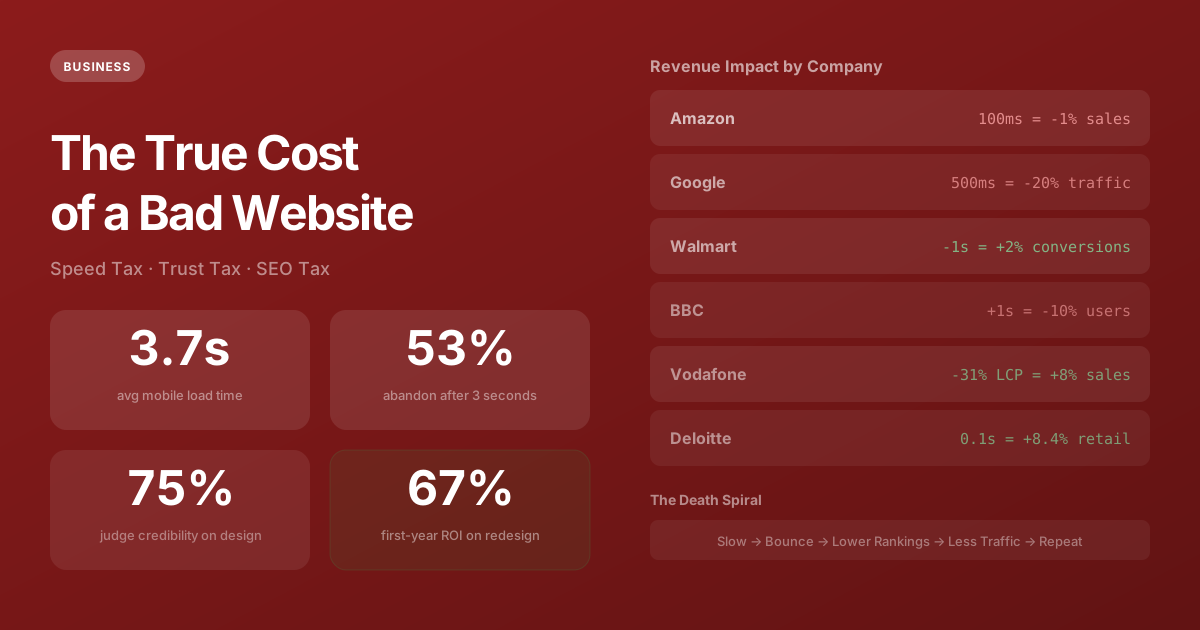
The cheapest website is often the most expensive in the long run. A slow, poorly optimized site loses customers every day it's live. Studies consistently show that every second of load time above 2 seconds increases bounce rates by 30%+ and directly reduces conversion rates. If your website generates $50,000/month in revenue and a poor experience is costing you even 10% of conversions, that's $5,000/month — $60,000/year — in lost revenue. The "savings" from choosing the cheapest option cost more than the premium option within months.
Bottom Line
A website is an investment, not an expense. The right question isn't "how much does a website cost?" — it's "what's the return on this investment?" A $15,000 website that generates $200,000 in annual revenue has a 13× ROI. A $50,000 SaaS platform that generates $500,000 in ARR has a 10× ROI. Focus on the return, invest in quality engineering, and the cost becomes irrelevant compared to the value created.
Need help with this?
We build exactly what this article describes — production-grade digital products for ambitious companies.
Start a Project →